
The short answer
- Chain, belt, screw and wall-mount systems use different drive hardware and mounting arrangements, which affect installation cost.
- Door weight and size determine compatible opener capacity, while battery backup, phone connectivity and keypads change the equipment package.
- Old-unit removal, rail fitting, control setup and any electrician's outlet or wiring work affect the complete installation scope.
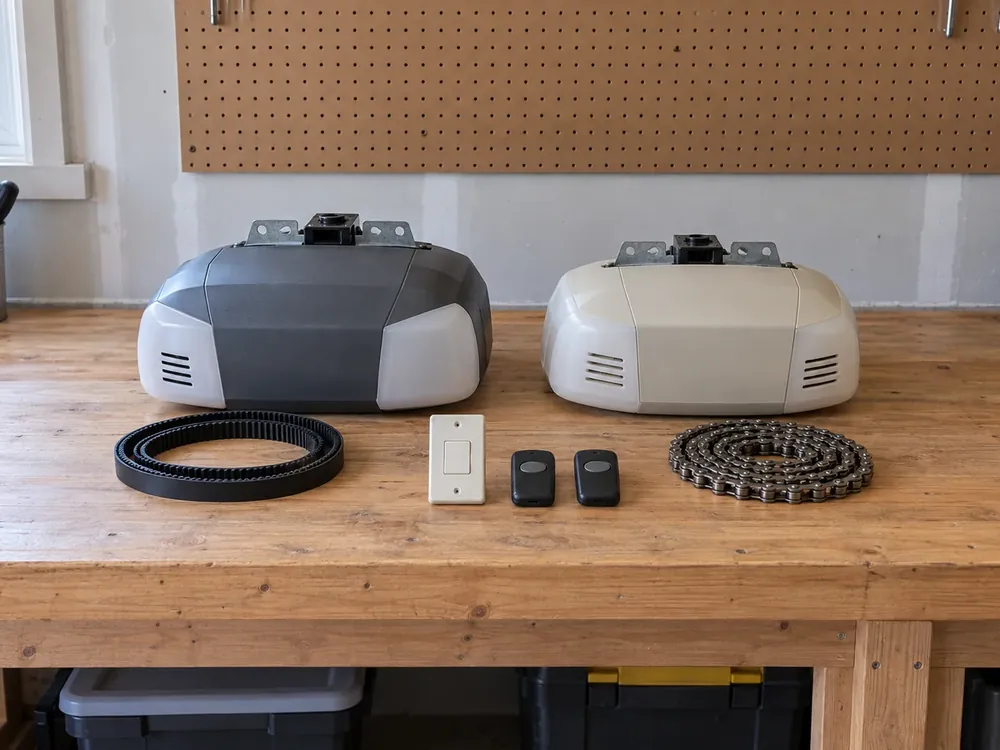
Opener Equipment and Installation Cost Factors
A loud, slow opener or a failed control board can make replacement worth discussing. Garage door opener installation price depends on the drive, door requirements, features and fitting work. A completed installation should start on the first command and move the door through its full travel. Call to describe the noise, hesitation or loss of response.
Drive Type and Mounting Space
A rattling overhead drive or rail crowding the ceiling gives you a reason to compare drive layouts. Chain, belt and screw units use an overhead rail; wall-mount systems fit beside a compatible door. Genie's explanation of opener types describes their different mechanisms and notes the lower vibration of belt drives.
The right selection should provide smooth movement within the garage's available space. Call to discuss the noise and clearance that bother you now.
| Drive choice | Equipment or fitting consideration |
|---|---|
| Chain | Chain drive, overhead rail and mounting supports |
| Belt | Belt drive for reduced drive noise and vibration |
| Screw | Threaded drive rod and door compatibility |
| Wall-mount | Side clearance and a compatible shaft and door arrangement |
Motor Capacity for a Heavy or Double Door
An opener straining at the start needs a door-balance check as well as a motor assessment. Door width alone doesn't determine motor capacity. Genie's product-selection FAQ identifies door size, construction and weight as factors in choosing power and drive type.
A new motor shouldn't be used to overpower a broken spring or binding door. Your technician checks the door's lifting system and matches the opener to the door. The finished system should lift without jerking or repeated stops. Mention a heavy door or added insulation when you call.
Backup Power, Phone Access and Keypads
A remote that works only intermittently or an opener that stops during a power outage can change the feature package you choose. The cost of a new garage door opener includes the selected unit and accessories, so compare exactly which controls and backup components are included. Battery backup supports operation during an outage when the battery is charged and working; phone control depends on the selected system and its connection requirements.
After setup, your technician checks the remotes, keypad and any chosen app controls. Call to discuss how you enter the garage and which functions you need.
Removal, Rails and Electrical Work
A sagging motor mount or failing old unit adds installation tasks beyond unpacking a new opener. The garage door opener installation fee should describe removal of the old unit, required supports, rail fitting, control wiring and programming. Existing components need a compatibility assessment rather than automatic reuse.
If the installation needs a new outlet or changes to household wiring, that electrical work belongs with an electrician. A loose or damaged power connection shouldn't be left as the reason a new unit loses power. Call to include those symptoms in the installation discussion.
One of our local garage door partners will set out the equipment, labor and any separate electrical work and explain the price before installation begins.
Repair Compared With a New Unit
A working motor with a faulty control is a different starting point from a failed board in an opener lacking photo eyes. Garage door opener repair cost depends on the fault and needed parts. Replacement adds new equipment and installation but can address an outdated safety system at the same time.
Ask for the repair scope and the replacement scope during the service discussion. Compare the complete garage door opener and installation cost with the work needed to restore the existing unit. Either finished option needs reliable controls and successful safety tests. Call about opener repair or opener installation.
Safety Tests and Owner Observations
An opener that closes despite a blocked safety beam needs service, even if the remote still works. 16 CFR Part 1211 sets entrapment-protection requirements for automatic residential garage door operators. Your technician checks automatic contact reversal and, on a photo-eye system, reversal when the closing door's beam is interrupted. The door should also close to the floor without bouncing back from an incorrect travel setting.
Call now about a failed safety response. Stay outside the door's path, and don't run the opener with a broken spring or tilted door. Unplug an unsafe unit only from a safely reachable plug, remembering that backup power may remain. Leave tensioned springs, cables, drums and bottom brackets to your technician.
If the door is level and intact, you may check the remote battery, wall control lock switch and photo-eye lenses and alignment. Those observations are optional; you can describe the trouble during the call without testing anything.