
The short answer
- Stop pressing the opener control if a spring has a visible gap, a cable hangs loose or the door sits crooked.
- Call now about the stuck door; remote batteries, the wall control's lock switch and photo-eye lights are optional observations for the conversation.
- Stay out of the door's path and leave lifting hardware, force adjustments and release problems to your technician for diagnosis and testing.
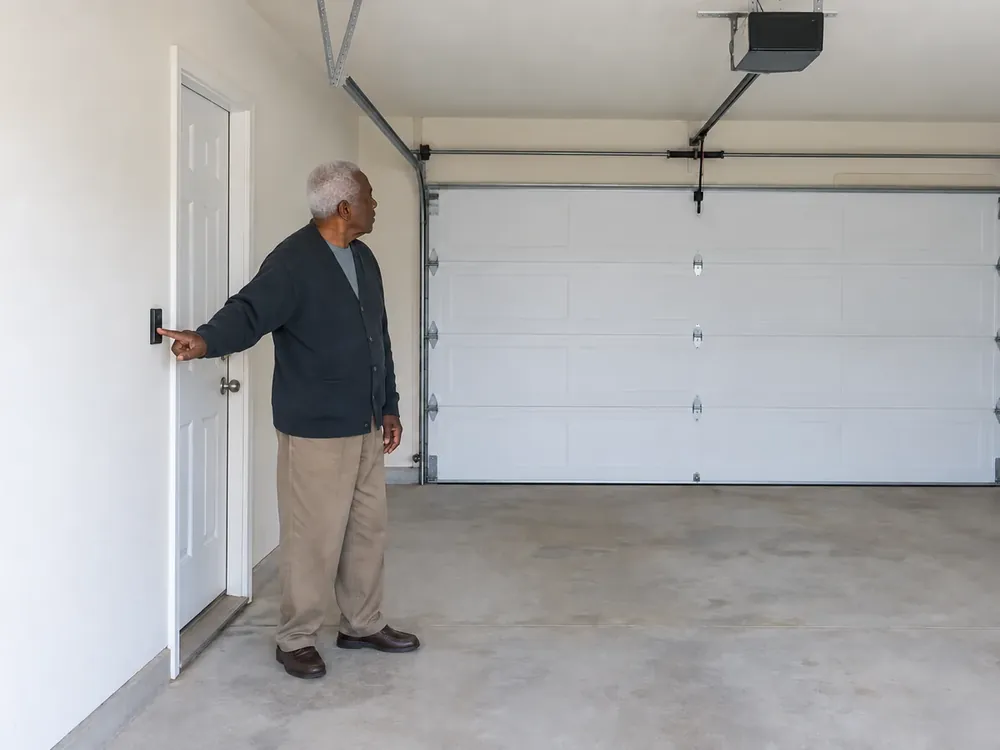
Safe Checks and Signs a Door Needs Repair
A door that won't move needs a cause check, starting with signs of damaged lifting hardware. Stop repeated commands and call now. Garage door problem solving should end with the door opening on the first press, closing level and passing safety tests. Observations about power, controls and sensors help the conversation, but you don't need to diagnose the fault yourself.
A Closed Door That Won't Lift
A closed door with a visible spring gap or a loose cable needs professional attention without another opener attempt. A motor humming while the door stays down can signal a door or drive problem; the sound alone doesn't identify the cause. A completed repair should restore even lifting without forcing the opener.
Call and describe the bang, hum or lack of movement. Don't adjust springs, cables, drums or bottom brackets. Don't try to lift a door that feels unusually heavy or has visible damage.
For a level door with no visible damage, look at the opener's power connection only from a safe position. Check the remote battery and the wall control's lock switch if you'd like. Genie's troubleshooting chart includes power, control locks and remote batteries among possible causes of an unresponsive opener. Leave damaged wiring and repeated electrical trips for professional assessment.
An Opener Running Without Moving the Door
An opener that runs while the door stays still may have a disconnected emergency-release trolley or a drive fault. A reconnected, functioning system should move the door with the motor, without slipping or jerking. Tell us during the call if the release was pulled recently.
The release disconnects the door from the opener; it doesn't repair the door's lifting system. The Consumer Product Safety Commission's garage-door safety publication warns that a weak or broken spring can let a released, raised door fall rapidly. Don't pull the release on an open, crooked or damaged door. Your technician can assess balance and the connection without asking you to force the door.
A Door That Won't Close or Reverses
A garage door that won't close may have something blocking the photo-eye beam or sensors that no longer face each other. Once the fault is corrected, the door should close fully with a clear beam and reverse if the closing beam is interrupted. Call about blinking lights, repeated reversal or a door left open.
From outside the travel path, look for an object blocking the beam. On an otherwise intact door, gently clean accessible sensor lenses with a soft dry cloth and visually check that the eyes face each other. Genie's maintenance instructions describe lens cleaning and checking alignment through the sensor lights. Don't bypass sensors or hold a control to defeat a safety fault.
A Door That Stops Partway
A door stopping at the same height may be binding, meeting an obstruction or reaching an incorrect travel limit. A repair should restore continuous travel without scraping or a sudden stop. Call with the stopping height and any sound you hear from a safe distance.
You can look for an obvious obstruction without reaching into a track or standing beneath the door. Leave track hardware, travel settings and close-force settings to your technician. Increasing force can hide resistance while weakening protection against an obstruction. Don't keep cycling the opener to push through the sticking point.
| What you notice | Safe observation | Technician's completed check |
|---|---|---|
| Remote gives no response | Battery and wall control lock status | Commands work from each control |
| Door reverses while closing | Clear beam and clean sensor lenses | Full closing and beam reversal |
| Door stops at one height | Obstruction visible from outside its path | Smooth travel without binding |
| Door tilts or roller leaves track | Observe from a distance only | Supported door, aligned travel and balance |
A Crooked Door or Roller Outside the Track
A door hanging at an angle or showing a roller outside its track needs to stay unused. Impact damage, track movement or a lifting-system fault can cause a garage door to come off track. Restoring the rollers alone won't address an unresolved cause. A finished repair should keep both sides level through opening and closing.
Call for off-track garage door repair and keep people away from the opening. Don't push a roller back in, bend a track or release a raised door. If the opener plug is reachable from the floor without approaching the damaged door, unplug it; a backup battery can still power the unit, so keep controls unused too.
A Complete Repair and Safety Test
A door that moves again still needs checks for balance, closing position and reversal. 16 CFR Part 1211 addresses entrapment protection for automatic residential garage door operators. Your technician checks the applicable safety functions, including contact reversal and the photo-eye response on systems using a beam.
One of our local garage door partners will identify the repair scope and explain the price before work starts. The finished door should open from the remote, reach the floor evenly and reverse correctly during controlled testing. Call about garage door repair and describe what happens when you try the control.